- Diabetes Specialist Clinic in Vadodara & Dahod
- Vadodara +91 78620 40878
- Dahod +91 97240 40879

What Is HbA1c? Understanding Your Diabetes Test Results
What Is HbA1c? Understanding Your Diabetes Test Results
The HbA1c test is an important blood test used to understand your average blood sugar levels over the past two to three months. It helps healthcare professionals assess blood glucose control and diagnose prediabetes and diabetes when used appropriately.
If you have recently received an HbA1c report, you may be wondering what your result means, whether it falls within the normal range and what steps you should take next. In this guide, we explain what HbA1c means, how the test works, normal HbA1c ranges, diabetes levels and when to consult a diabetes specialist.
What Is HbA1c?
HbA1c stands for glycated haemoglobin. Haemoglobin is a protein in red blood cells that carries oxygen. When glucose circulates in your blood, some of it attaches to haemoglobin.
The HbA1c test measures the percentage of haemoglobin that has glucose attached to it. In general, a higher HbA1c result indicates higher average blood glucose levels over the preceding two to three months.
Unlike a single blood sugar reading, which reflects glucose at one point in time, HbA1c provides a broader picture of your blood sugar levels over time.
What Is the Normal HbA1c Range?
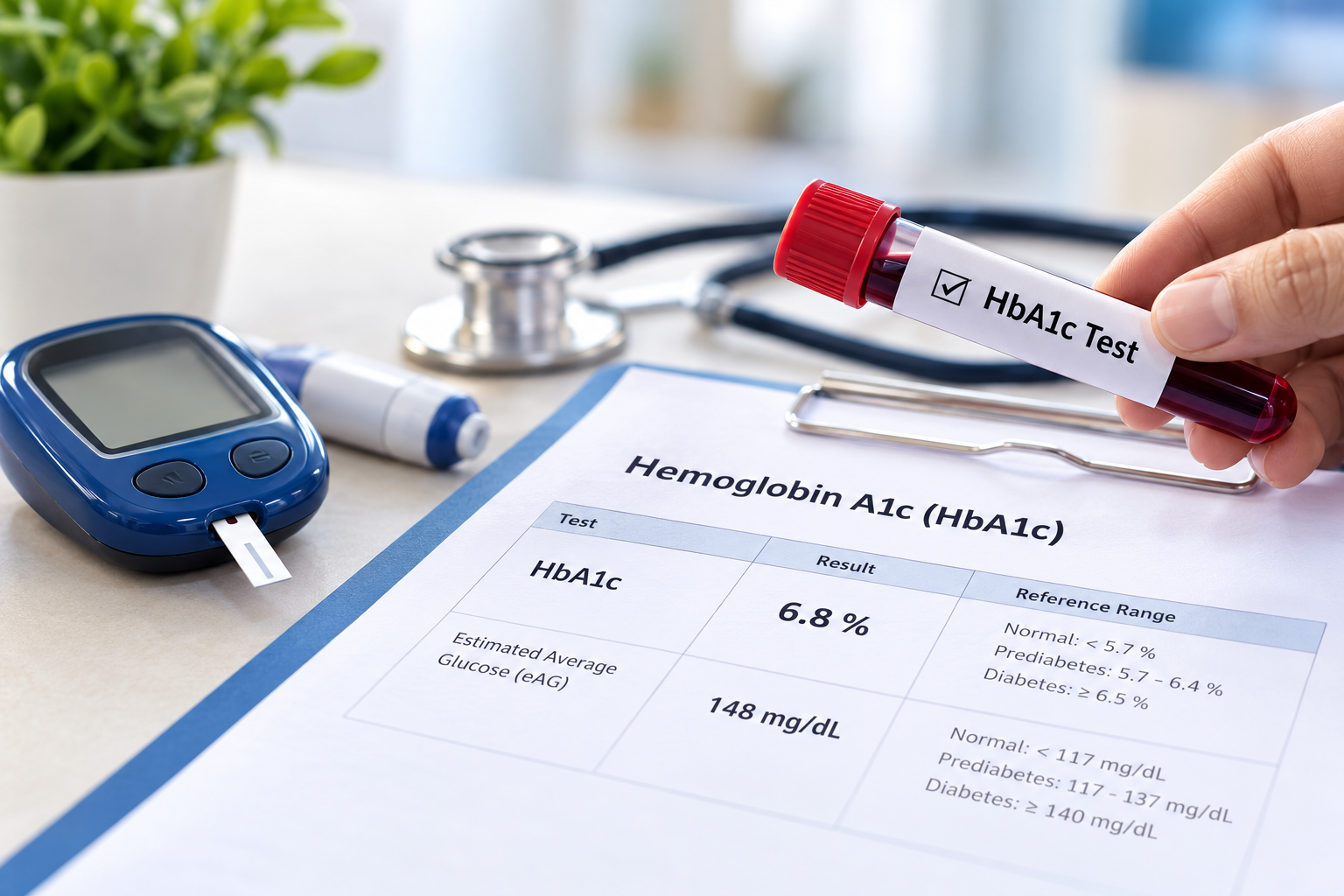
HbA1c results are generally interpreted using the following ranges for diagnosing diabetes and prediabetes:
HbA1c Result | General Interpretation |
|---|---|
Below 5.7% | Normal range |
5.7%–6.4% | Prediabetes range |
6.5% or above | Diabetes diagnostic range |
These ranges help guide assessment, but an individual diagnosis should be made by a qualified healthcare professional. In the absence of clear symptoms or very high blood glucose, a diabetes-range result generally needs confirmation with repeat or additional testing.
What Does Your HbA1c Result Mean?
HbA1c Below 5.7%
An HbA1c below 5.7% is generally within the normal range for diabetes diagnosis.
However, this result does not rule out every possible blood sugar problem. If you have symptoms or significant risk factors, your doctor may recommend further testing.
HbA1c Between 5.7% and 6.4%
This range is associated with prediabetes. It means your blood glucose is higher than normal but does not meet the HbA1c threshold for diabetes.
Your healthcare professional may discuss lifestyle changes, weight management where appropriate, and follow-up testing based on your overall risk. Prediabetes does not mean that you will inevitably develop type 2 diabetes.
HbA1c of 6.5% or Above
An HbA1c of 6.5% or above falls within the diabetes diagnostic range.
If you receive a result in this range, consult your doctor to understand whether confirmation is needed and what further evaluation or management may be appropriate. Do not start, stop or change diabetes medication based on the HbA1c number alone.
Why Is the HbA1c Test Important?
The HbA1c test can help with several aspects of diabetes care.
Diabetes diagnosis: It can help identify diabetes or prediabetes.
Long-term monitoring: It provides information about average blood glucose over time.
Treatment review: It helps your healthcare professional assess whether your current diabetes management plan is meeting your individual goals.
Follow-up planning: It can help guide decisions about future testing and treatment reviews.
HbA1c is only one part of diabetes care. Your doctor may also consider home glucose readings, continuous glucose monitoring data, symptoms, medicines and other health conditions.
Do You Need to Fast Before an HbA1c Test?
Usually, fasting is not required for an HbA1c test. You can generally have the test without avoiding food beforehand.
However, if your doctor has also ordered a fasting blood glucose test or other investigations, you may need to follow separate preparation instructions. Confirm the requirements with your healthcare professional or laboratory.
How Often Should You Get an HbA1c Test?
The appropriate testing frequency depends on whether you have diabetes, your treatment plan and how well your blood glucose is being managed.
For many people with diabetes, HbA1c testing is recommended at least twice a year. It may be needed approximately every three months when treatment changes or blood sugar goals are not being met. Your doctor can recommend an appropriate schedule for you.
Do not assume that everyone needs testing at the same interval. Your medical history and individual circumstances matter.
Can HbA1c Results Be Inaccurate?
Although HbA1c is useful, certain health conditions can affect how accurately it reflects blood glucose levels.
Factors that may affect results include some types of anaemia, certain haemoglobin disorders, kidney or liver disease, recent blood loss or transfusion, and pregnancy-related factors.
Tell your doctor about relevant medical conditions and recent treatments. If your HbA1c result does not match your home glucose readings or symptoms, your doctor may recommend other tests.
HbA1c vs. Daily Blood Sugar Testing
These tests provide different types of information.
HbA1c Test | Daily Blood Sugar Test |
|---|---|
Reflects average blood glucose over roughly 2–3 months | Shows glucose at the time of testing |
Usually does not require fasting | Timing and meals affect the reading |
Helps assess longer-term glucose control | Helps monitor short-term changes |
Does not show every glucose spike or low | Can help identify individual highs and lows |
Both may be useful in diabetes management. HbA1c does not capture every glucose fluctuation, so your doctor may consider other glucose readings or continuous glucose monitoring when appropriate.
How Can You Manage Your HbA1c Levels?
If your HbA1c is above your individual target, your healthcare professional may review your overall diabetes management plan.
Depending on your health needs, this may involve:
Following a balanced eating plan suited to your requirements.
Maintaining regular physical activity, where medically appropriate.
Working toward a suitable weight-management goal, if needed.
Taking prescribed medicines as directed.
Monitoring blood glucose as recommended.
Attending follow-up appointments and completing recommended tests.
The right approach differs from person to person. Do not change prescribed medication or insulin doses without medical guidance. Your HbA1c target should be personalised according to your health history, treatment and risk of low blood sugar.
HbA1c Testing and Diabetes Care at Shivaay Clinic
At Shivaay Clinic, diabetes care focuses on understanding each patient’s blood glucose levels, treatment requirements, lifestyle and ongoing health needs.
Under Dr. Abhishek Sharma, Consultant Diabetologist, diabetes-focused care is available at the clinic locations in Vadodara and Dahod.
Our services include diabetes care, blood sugar management, lifestyle and metabolic medicine, glucose monitoring support, and diabetes complication screening.
If you have an HbA1c report you do not understand, consult a healthcare professional for an individual assessment and guidance.